




By using our website, you agree to the use of cookies as described in our Cookie Policy
The Easiest Way Families Tackle Home Decluttering in Niangua
Most families think decluttering is just about throwing stuff away. Bag it up, haul it out, done. But the reality is messier than that — and if you don't have a system, you're setting yourself up for frustration. Clutter doesn't just take up space. It drains energy, creates tension, and makes every room feel smaller than it actually is. Especially when you're trying to keep a household running smoothly.
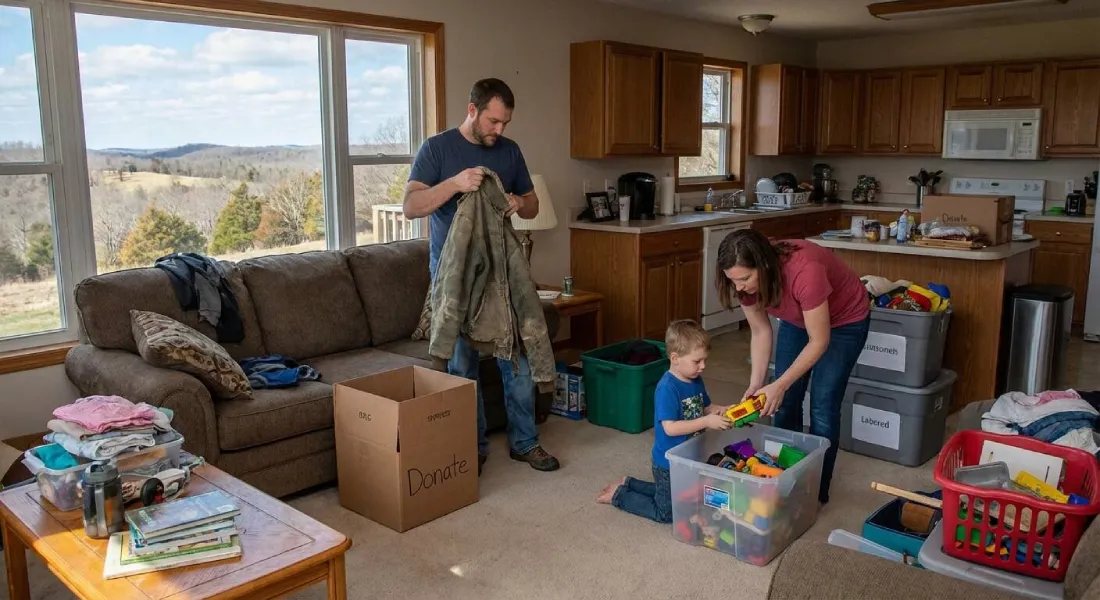
So here's what works. If you're serious about reclaiming your home, you need more than motivation. You need a plan that involves everyone, breaks the work into pieces, and doesn't require you to cancel your life for a week. Every item should have a decision attached to it. Every room needs a clear purpose. And every family member should know what they're responsible for — not just what needs to happen eventually.
Clutter Costs More Than Space
Nine times out of ten, the mess isn't the real problem. It's what the mess represents — delayed decisions, avoided conversations, and stuff that nobody actually uses but everyone's afraid to toss. In Niangua, where homes are central to family life and community gatherings, a cluttered house doesn't just look bad. It feels bad. You can't relax when you're surrounded by chaos. You can't find what you need when everything's buried. And you definitely can't host comfortably when half your living room is a storage unit.
But if you wait for the perfect weekend to fix it all at once? You'll never start. Clutter builds slowly, and it clears the same way. The families who actually make progress are the ones who stop waiting for ideal conditions and start chipping away at the problem with a system that fits their schedule.
The Method That Actually Gets Results
You can't write off clutter by ignoring it — that's just letting the problem compound. But you can break it down into steps that don't require superhuman effort. Families in Niangua dumpster rental areas are using a straightforward approach that turns a massive project into a series of small, winnable tasks.
Here's where that matters most:
- Set a shared goal: Get everyone in the same room and talk about why this matters. More space for activities? Easier cleaning? A calmer environment? When the whole family understands the why, the work gets easier.
- Break it into zones: Don't try to declutter the entire house in one go. Assign rooms or categories to different family members. One person handles toys, another tackles clothes, someone else takes the kitchen.
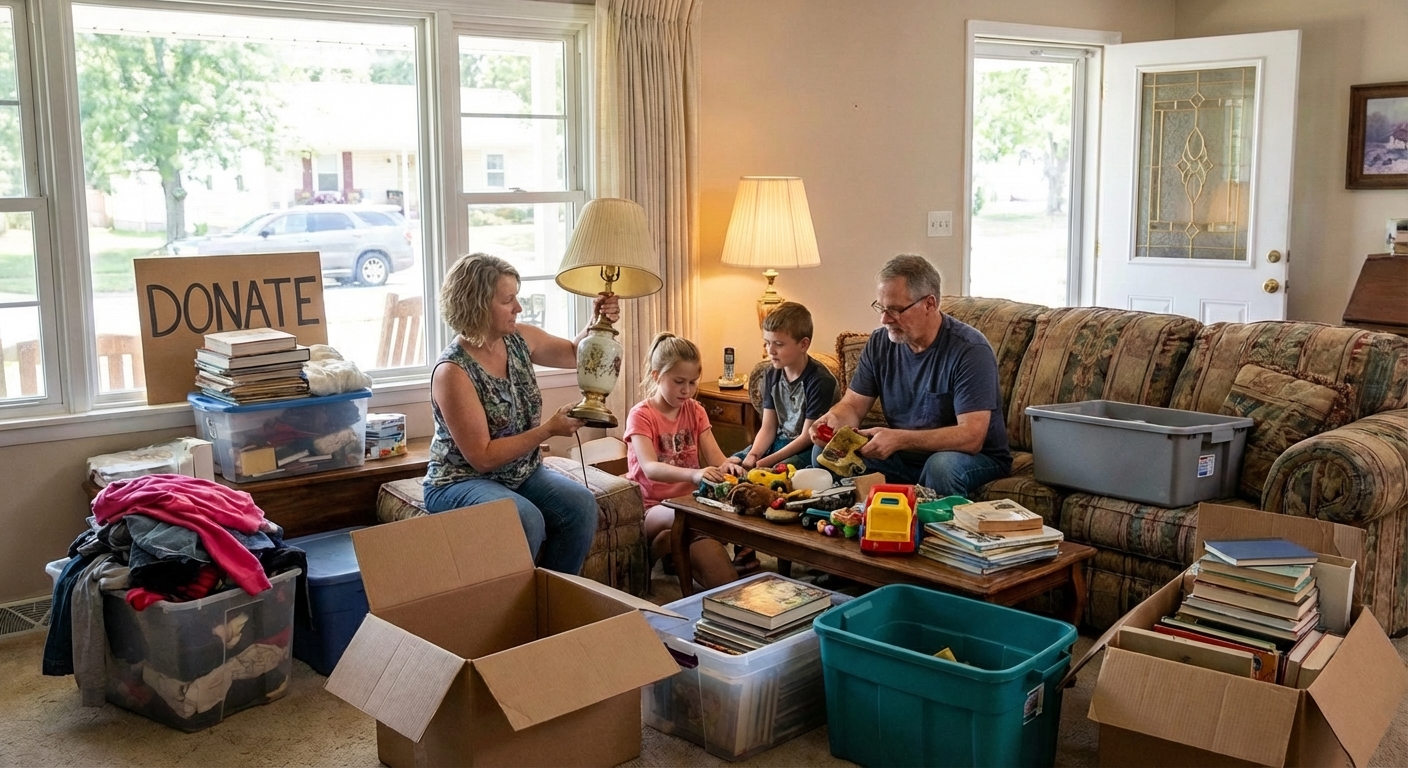
- Use the three-pile rule: Keep, donate, trash. Every item gets sorted into one of those buckets. No "maybe" piles. No "I'll decide later" stacks. Make the call and move on.
- Organize what survives: Once you've cut the excess, give everything left a proper home. Bins, labels, shelves — whatever keeps things visible and accessible. If kids can't find their own stuff, they'll just create new piles.
- Build in small wins: After each session, take a minute to appreciate what you've accomplished. A clean counter, an empty closet, a drawer that actually closes — those matter.
When the System Breaks Down
Want to keep momentum? You'll need to avoid the traps that derail most families halfway through.
The biggest mistakes we see:
- Starting too big: Trying to declutter the whole house in a weekend sounds ambitious. It's also a recipe for burnout. Start with one drawer, one shelf, one corner. Small progress beats grand plans that never happen.
- Skipping the schedule: If decluttering only happens "when we have time," it won't happen. Block out 15 minutes a day or one hour every Saturday. Consistency beats intensity.
- Leaving kids out: Even young children can sort toys or decide which books they've outgrown. When they're involved, they're more likely to keep things tidy afterward.
- Holding onto guilt: That gift you never used, the clothes that don't fit, the gadget you bought on impulse — keeping them won't change the past. Donate them and move on.
- Ignoring local resources: Niangua has churches, community centers, and charities that will gladly take gently used items. Don't let donation logistics become an excuse to keep clutter.
Families Are Seeing Real Change
The families who commit to this approach don't just end up with cleaner homes. They build better habits, teach their kids decision-making skills, and create space for what actually matters. A decluttered home isn't about perfection. It's about function. It's about being able to find your keys, host a dinner, or let your kids play without tripping over last year's forgotten projects.
Local groups in Niangua are sharing their wins online — before-and-after photos, tips on what worked, and even neighborhood swap events where families exchange items instead of tossing them. It's not just about clearing space. It's about building a community that values simplicity and supports each other through the process.
What You Need to Keep It Going
Want to maintain progress? You'll need more than a one-time purge. You'll need systems that prevent clutter from creeping back in.
Here's what successful families are doing:
- One in, one out: When something new comes into the house, something old goes out. New toy? Donate an old one. New shirt? Toss one that's worn out.
- Weekly resets: Spend 10 minutes every Sunday putting things back where they belong. It's easier to maintain order than to rebuild it from scratch.
- Assign ownership: Every family member is responsible for their own space. Kids manage their rooms, adults handle shared areas. Accountability keeps things from sliding.
- Limit storage: More bins and shelves just give you more places to hide clutter. If it doesn't fit in the space you have, you probably don't need it.
- Review quarterly: Every few months, do a quick sweep of each room. Donate what's no longer useful, toss what's broken, and reorganize what's left.
Where Most Families Go Wrong
Trying to declutter without a plan is like trying to save money without a budget. You might make some progress, but you'll waste time, energy, and motivation along the way. The families who succeed are the ones who treat decluttering like a project — with clear goals, defined roles, and regular check-ins.
And here's the thing: you don't need to be perfect. You just need to be consistent. A little progress every week adds up faster than you think. The goal isn't a magazine-worthy home. It's a space that works for your family, supports your routines, and doesn't make you feel stressed every time you walk through the door. Many families find that having access to decluttering tips for Springfield homes helps them stay on track with proven strategies that work in similar communities.
Progress Beats Perfection Every Time
Decluttering isn't a one-and-done event. It's a habit you build, a system you maintain, and a mindset you adopt. The families in Niangua who've made real progress didn't do it by waiting for the perfect moment or trying to fix everything at once. They started small, stayed consistent, and involved everyone in the process. Understanding waste management strategies can help you develop better systems for handling household items long-term. When you're ready to tackle larger cleanout projects, knowing how to choose the right dumpster size ensures you have adequate capacity without overpaying. For major home renovations that generate significant debris, roll-off dumpsters in home renovations provide the most efficient solution. Nearby communities like Lebanon dumpster rental services demonstrate how accessible professional waste removal can be for rural families.
There's no magic formula. Just a willingness to make decisions, let go of what's not serving you, and create space for what actually matters. If you're ready to stop living around your clutter and start living in your home, the system is simple. The results speak for themselves. And the best time to start is right now.
Let’s Reclaim Your Space Together
We know how overwhelming it can feel to tackle clutter on your own, but you don’t have to do it alone. Let’s work as a team to create a home that feels open, organized, and truly yours. If you’re ready to make a real change, give us a call at 417-241-2996 or contact us today and let’s get your family on the path to a clutter-free home.
‹ Back
Recent Posts
-
How Much Does a 20 Yard Dumpster Rental Cost in Nixa?
July 13, 2026
-
-
-
-
How Much Does It Cost to Rent a Dumpster in Branson?
May 18, 2026